

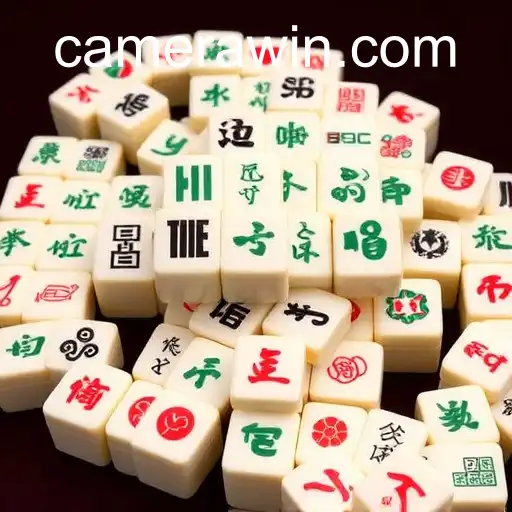
Understanding the Game of Mahjong
Mahjong is a traditional Chinese game that has been played for centuries and has gained popularity across the globe. Known for its strategic depth and cultural significance, it can be both a social and competitive endeavor. This game, typically played by four players, involves skill, calculation, strategy, and a small degree of chance.
The Origins of Mahjong
The exact origins of Mahjong are somewhat shrouded in mystery, with several accounts suggesting different beginnings. Some believe that it was developed during the Qing Dynasty, while others argue for its roots in the earlier periods of Chinese history. What is clear, however, is that the game has evolved significantly over the years, influencing and being influenced by various cultures as it spread.
The Structure of the Game
A standard Mahjong set consists of 144 tiles based on Chinese characters and symbols, although regional variations may have a different number of tiles. These tiles are typically divided into three suits: dots, bamboos, and characters. Additionally, there are honor tiles (winds and dragons) and optional bonus tiles (flowers and seasons).
Basic Rules of Play
The objective of Mahjong is to build a complete hand, usually consisting of four sets and a pair. Sets can be a ‘pong’ (three identical tiles), a ‘chow’ (a sequence of three consecutive numbers within the same suit), or a ‘kong’ (four identical tiles). A pair is two identical tiles. Players draw and discard tiles in turn, aiming to complete their hands with a winning combination.
The game begins by shuffling the tiles and building a wall of tiles in front of each player. Players then draw tiles, typically 13, depending on the regional rules, and begin the process of drawing and discarding tiles to achieve the best hand.
Strategies and Skills
While there is a degree of chance in the tiles drawn, players often employ various strategies to increase their chance of winning. Some of these strategies involve memorizing the discarded tiles, predicting other players’ strategies, and adjusting one’s approach accordingly. Mastering Mahjong requires keen observation, mathematical skills, and the ability to make swift, strategic decisions.
The Global Spread of Mahjong
Mahjong’s appeal transcends its Chinese origins, having been introduced to countries like Japan, Korea, and the United States, each developing their own unique variations of the game. In many places, Mahjong clubs and tournaments attract players eager to test their skills and meet like-minded enthusiasts.
The online gaming community has further propelled the game’s popularity, making it accessible to players worldwide. Companies such as WG-Camera.COM, known for integrating technological advances with classic gaming experiences, have contributed to modernizing and digitizing the game, allowing for immersive, interactive online play.
Mahjong as a Cultural Symbol
Beyond being just a game, Mahjong serves as a cultural bridge and a symbol of relaxation and social interaction in various communities. In China, it is a staple during family gatherings and holidays. The game’s presence in popular media and literature further underscores its cultural significance and allure.
Mahjong's enduring popularity is not just due to its strategic depth but also its ability to bring people together, transcending language and cultural barriers. In this way, Mahjong reflects a global tradition of gaming, communication, and shared enjoyment.
Conclusion
Understanding Mahjong is key to appreciating its cultural and entertainment value. As individuals and companies like WG-Camera.COM continue to innovate and expand the game’s reach, it remains an eternal testament to the blend of strategy, chance, and rich tradition. For enthusiasts and newcomers alike, Mahjong offers a compelling combination of mental challenge and communal enjoyment, ensuring its place as a beloved pastime for generations to come.